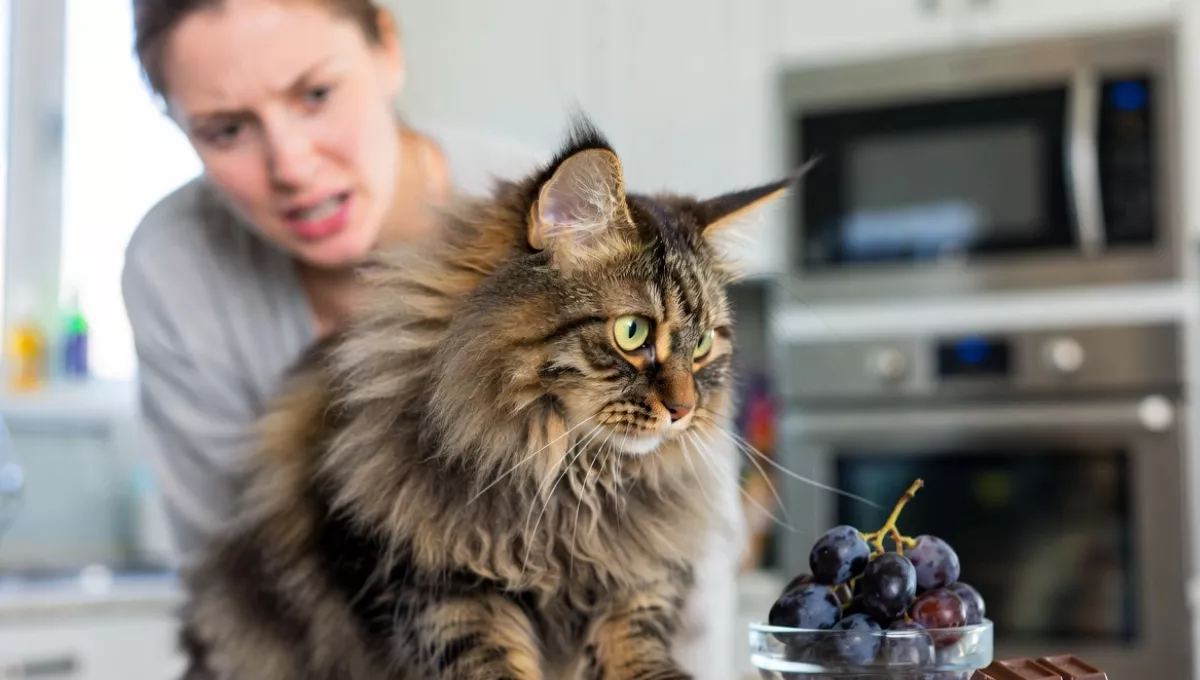
If you share your home with a Maine Coon, you already know they’re not exactly shy around food. These cats are curious, bold, and surprisingly good at getting into things they shouldn’t. That combination is adorable — until it isn’t.
The truth is, some of the most common foods sitting in your kitchen right now could seriously harm your Maine Coon. We’re not talking about obscure ingredients. We’re talking about things like garlic bread, a grape off your plate, or a splash of your morning coffee. Foods toxic to Maine Coons are often the ones we’d never think twice about.
This isn’t a scare post. It’s a practical guide. Knowing what to keep away from your cat is one of the most straightforward things you can do to protect them — and it starts right here.
THE SHORT ANSWER
Foods toxic to Maine Coons include: onions, garlic, grapes, raisins, chocolate, caffeine, alcohol, xylitol, raw dough, macadamia nuts, avocado, cooked bones, dairy, raw eggs, raw fish (in excess), liver (in excess), salt, citrus, coconut, and green tomatoes. Even small amounts of several of these can cause kidney failure, neurological damage, or death.
The Toxic Foods List at a Glance
| The Danger Food | Toxic Compound | Risk Level |
|---|---|---|
| Chocolate | Theobromine | CRITICAL |
| Onions & Garlic | Thiosulfates/Organosulfides | CRITICAL |
| Grapes & Raisins | Unknown nephrotoxin | CRITICAL |
| Xylitol | Sugar alcohol compound | CRITICAL |
| Alcohol | Ethanol | CRITICAL |
| Caffeine | Methylxanthines | HIGH |
| Raw Yeast Dough | Ethanol + expansion | HIGH |
| Macadamia Nuts | Unknown toxin | HIGH |
| Cooked Bones | Splinter/perforation risk | HIGH |
| Salt/Salty Snacks | Sodium ion poisoning | HIGH |
| Nutmeg | Myristicin | HIGH |
| Chives & Leeks | Organosulfides | CRITICAL |
| Avocado | Persin | MODERATE–HIGH |
| Raw Eggs | Avidin/Salmonella | MODERATE |
| Excess Raw Fish | Thiaminase enzyme | MODERATE |
| Excess Liver | Vitamin A toxicity | MODERATE |
| Citrus Fruits | Essential oils/psoralens | MODERATE |
| Green Tomatoes | Solanine/Tomatine | MODERATE |
| Dairy Products | Lactose intolerance | LOW–MODERATE |
| Coconut/Oil | High MCTs | LOW–MODERATE |
Note: Foods toxic to Maine Coons ranked by Sophie’s risk assessment — based on toxicology data and veterinary literature. “Sophie’s Warning Score” reflects urgency of keeping the food away, not just likelihood of exposure.
The Critical Five: Foods That Can Kill a Maine Coon Fast
These aren’t “avoid if possible” foods. These are hard stops. Even a small amount can trigger organ failure or death in a cat the size of a Maine Coon — and because these breeds are larger, owners sometimes wrongly assume they can tolerate more. They can’t. Toxicity in cats is rarely about body weight the way it is in dogs.
1. Chocolate
The Risk: Chocolate contains theobromine and caffeine, both methylxanthines. Cats process these compounds far more slowly than humans, meaning they build up to toxic levels quickly.
Dark chocolate and baking chocolate are the most dangerous. Milk chocolate is still a threat. White chocolate has the lowest theobromine content but is still not safe.
Symptoms to watch for: vomiting, diarrhea, rapid breathing, elevated heart rate, seizures, muscle tremors.
Key Specs: Even 1–2 oz of dark chocolate can be life-threatening for a cat. No safe threshold exists.
✅ The Good: Cats typically don’t seek out chocolate on their own — they lack the sweetness receptors to be attracted to it.
❌ The Bad: Chocolate is in baked goods, protein bars, hot cocoa powder, and trail mix. It hides everywhere.
2. Onions, Garlic, Chives & Leeks
The Risk: Every member of the allium family contains organosulfide compounds that damage red blood cells in cats, leading to Heinz body anemia. What makes this especially dangerous is that cooking doesn’t neutralize the toxins.
Garlic powder and onion powder are actually more concentrated than fresh, so that jar of seasoning in your pantry is a serious hazard. This includes garlic bread, soups, baby food with onion powder, and any seasoned meat you might be tempted to share.
Symptoms to watch for: weakness, pale gums, reduced appetite, orange or dark-colored urine, lethargy, collapse.
Key Specs: Garlic is considered roughly 5x more toxic than onions per weight for cats. Even small repeated exposures (like a lick of garlic butter daily) can accumulate.
✅ The Good: These have a strong smell most cats instinctively avoid.
❌ The Bad: They’re hidden in almost every savory human food — sauces, stocks, deli meats, leftovers.
3. Grapes & Raisins
The Risk: This one is particularly alarming because the toxic compound in grapes and raisins hasn’t been definitively identified yet — which means there’s no known safe dose.
What veterinary toxicology data does confirm is that grapes and raisins have been linked to acute kidney failure in both dogs and cats. Raisins are more dangerous by weight simply because they’re more concentrated.
Grape juice, wine, and anything containing raisins (trail mix, oatmeal raisin cookies, fruitcake) all fall into this category.
Symptoms to watch for: vomiting, lethargy, decreased urination or no urination at all — within 24 hours.
✅ The Good: Cats aren’t typically drawn to fruit by nature.
❌ The Bad: Raisins hide in granola bars, cereal, and baked goods that might be left on counters.
4. Xylitol
The Risk: Xylitol is a sugar alcohol used as a sweetener in hundreds of “sugar-free” and “low sugar” products. While research on xylitol toxicity in cats is less extensive than in dogs (where it causes rapid insulin release and liver failure), veterinary toxicologists advise treating it as dangerous for cats as well — and recent case reports support that caution.
The bigger practical issue: xylitol is everywhere. Sugar-free gum, certain peanut butter brands, vitamins, cough syrup, mouthwash, and chewable medications.
Key Specs: Always check labels on anything labeled “sugar-free,” “reduced sugar,” or “diabetic-friendly.”
✅ The Good: Cats won’t typically be drawn to sweet flavors.
❌ The Bad: It’s hidden in products cats could access indirectly — like licking a vitamin gummy that fell on the floor.
5. Alcohol
The Risk: This one seems obvious, but the danger isn’t limited to leaving a wine glass unattended. Alcohol is present in surprisingly many non-beverage items — mouthwash, certain medications, fermented foods, and raw yeast dough (which produces ethanol as it rises).
Cats have a much smaller liver than humans relative to their body mass, and they lack the same metabolic pathway to process ethanol. Even a teaspoon of alcohol can cause serious central nervous system depression, respiratory failure, and coma in a cat.
✅ The Good: The smell of most alcoholic beverages tends to repel cats.
❌ The Bad: Raw bread dough rising on your counter is an often-overlooked source of ethanol exposure.
The High-Risk Foods: Serious But Often Overlooked
6. Caffeine (Coffee, Tea, Energy Drinks)
Maine Coons are often right next to you on the couch while you’re sipping your morning coffee. The problem is that caffeine — like theobromine — belongs to the methylxanthine group.
Cats are highly sensitive to it. Coffee grounds, tea bags, energy drinks, and some medications all contain enough caffeine to cause rapid heart rate, tremors, and seizures.
A lick of your latte isn’t going to be catastrophic, but a knocked-over mug that your cat laps up from the floor? That’s a vet call.
Symptoms: hyperactivity, tremors, rapid breathing, elevated heart rate.
✅ Good: Most cats avoid the bitter smell of coffee.
❌ Bad: Tea bags left on a counter are surprisingly attractive to curious cats.
7. Raw Yeast Dough
If you bake at home, this one is critical. Raw dough containing yeast expands in the warm, moist environment of a cat’s stomach — causing painful bloating and potentially life-threatening gastric distension.
As the yeast ferments, it also produces ethanol, creating a two-in-one risk: physical obstruction AND alcohol poisoning. Keep rising dough completely out of reach.
8. Macadamia Nuts
The specific toxin in macadamia nuts that affects pets hasn’t been identified, which — much like grapes — makes it impossible to establish a safe dose.
While most documented toxicity cases involve dogs, veterinary professionals universally advise keeping macadamia nuts away from cats as well.
Symptoms include weakness, hyperthermia, vomiting, and tremors.
9. Salt & Salty Snacks
Potato chips, pretzels, popcorn, cured meats — cats are often drawn to the fat content in these foods, but the salt load comes along for the ride. Excess sodium in cats causes sodium ion poisoning, leading to vomiting, diarrhea, excessive thirst, tremors, and in severe cases, seizures.
Maine Coons, who tend toward hypertrophic cardiomyopathy (HCM) as a breed, are especially vulnerable to anything that stresses the cardiovascular system.
10. Nutmeg
A spice most people never think about. Nutmeg contains myristicin, a compound that causes hallucinations, disorientation, elevated heart rate, and seizures in cats. The risk is mostly from baked goods and holiday foods — pumpkin pie, eggnog, spiced cookies — left within reach.
11. Cooked Bones
Raw bones are a more nuanced discussion. Cooked bones, however, are not. Cooking makes bones brittle, causing them to splinter into sharp shards that can lacerate a cat’s mouth, throat, stomach, and intestines. Given how eager a Maine Coon can be around your dinner plate, this is a real and underappreciated risk.
Moderate-Risk Foods: Still Worth Taking Seriously
12. Avocado
Avocado contains persin, a fungicidal toxin found in the leaves, skin, and pit — and in lower concentrations, the flesh. Cats are considered less sensitive to persin than birds or rabbits, but the risk isn’t zero, and the pit is a serious choking and intestinal blockage hazard regardless of toxicity.
13. Raw Eggs
Two concerns here. First, raw eggs may carry Salmonella or E. coli — both of which can cause serious bacterial infections in cats. Second, raw egg whites contain avidin, a protein that blocks the absorption of biotin (Vitamin B7), which cats need for healthy skin and coat. Maine Coons, with their dense, layered coats, are particularly dependent on proper biotin levels.
14. Excess Raw Fish
A small amount of plain, cooked fish is generally fine for cats. The problem arises with regular feeding of raw fish — particularly raw tuna and salmon. Many raw fish contain thiaminase, an enzyme that destroys thiamine (Vitamin B1). Thiamine deficiency in cats causes severe neurological symptoms including seizures and loss of coordination. Raw salmon also carries a parasitic risk.
15. Excess Liver
Liver in moderation is actually nutritious for cats. The issue is Vitamin A toxicity from overconsumption. Cat liver is extraordinarily rich in Vitamin A, and excess Vitamin A causes bone deformities, joint pain, and in severe cases, paralysis. If you feed your Maine Coon a raw or home-cooked diet that includes liver, keep it to no more than 5% of total food intake.
16. Dairy Products
Cats are not designed to digest lactose after kittenhood — and Maine Coons are no exception to this despite their hearty, robust reputation. Milk, cream, ice cream, and soft cheeses will commonly cause digestive upset: diarrhea, bloating, vomiting. It won’t kill them, but it can make them miserable and stress their digestive system.
17. Citrus Fruits
Oranges, lemons, limes, and grapefruits contain essential oils and psoralens that are toxic to cats. Large amounts can cause central nervous system depression. Practically speaking, most cats will actively avoid citrus due to the smell — but citrus-flavored products, peels left on counters, and citrus-scented cleaning products are all worth being mindful of.
18. Green Tomatoes & Tomato Leaves
Ripe red tomatoes are generally considered low-risk in tiny amounts. But green (unripe) tomatoes, tomato leaves, and tomato stems contain solanine and tomatine — alkaloids that cause gastrointestinal distress, lethargy, and weakness. If you grow tomatoes at home, keep your Maine Coon out of the garden.
19. Coconut & Coconut Oil
Coconut flesh and coconut oil contain high levels of medium-chain triglycerides (MCTs) that can cause digestive upset and diarrhea in cats. Coconut water is high in potassium and isn’t appropriate for cats either. Despite the wellness trend around coconut oil for pets, the evidence doesn’t support its use for cats, and several veterinary nutritionists actively caution against it.
20. Macadamia & Mixed Nuts (General)
Beyond macadamia nuts specifically, most nuts pose choking risks, are high in fat (which stresses the pancreas), and in the case of moldy nuts, can contain tremorgenic mycotoxins. Walnuts and pecans are of particular concern if they’ve been stored improperly and developed mold.
How to Protect Your Maine Coon: Practical Safety Guide
Knowing the list is step one. Actually making your home safer is step two — and this is where most cat owners have gaps.
Store food with cats in mind, not humans. Maine Coons are exceptional jumpers and climbers. A countertop isn’t safe storage. Pantry doors that don’t fully latch, fruit bowls, open trash cans — all of these are access points for a determined, large cat.
Be especially careful with “invisible” toxins. The foods that send cats to the ER most often aren’t the ones owners think of immediately. It’s the onion powder in the leftover stew. The raisin in the granola bar. The xylitol in the sugar-free peanut butter used in a homemade treat.
Don’t share your plate. Even if something isn’t on this list, many seasoned, processed, or salted human foods contain combinations of ingredients that aren’t safe for cats. The cleanest rule is no human food off your plate, period.
Know your emergency contacts before you need them.
Save these numbers now:
ASPCA Animal Poison Control Center: (888) 426-4435 (available 24/7, consultation fee may apply) Your nearest emergency veterinary clinic
When in doubt, call.
Don’t wait for symptoms to appear. Some toxins — like grape/raisin nephrotoxins and certain allium compounds — have a delayed onset. By the time your cat is visibly sick, damage may already be occurring.
For deeper reading on feline toxicology and poison prevention, the Cornell Feline Health Center at Cornell University is one of the most trusted veterinary resources in the US and maintains updated guidance on cat health and poisoning risks.
Sophie’s Final Verdict
The foods toxic to Maine Coons aren’t exotic or obscure — they’re sitting in your kitchen right now. That’s what makes this topic genuinely important rather than just a standard “things cats can’t eat” list.
Your Maine Coon trusts you completely to manage their environment. They don’t know that the garlic in the pasta sauce or the raisins in your snack mix are dangerous. They just see something that smells interesting and a person they trust nearby.
The five critical-risk foods — chocolate, alliums, grapes and raisins, xylitol, and alcohol — deserve to be treated with zero tolerance in a home with cats. The moderate-risk foods deserve awareness and reasonable precaution.
And if you ever have doubt? Call the ASPCA Poison Control line first and ask questions later. That one habit could save your Maine Coon’s life.
Got a close call story, or a food that surprised you on this list? Drop it in the comments — I read every single one.

Editor-in-Chief & Breed Specialist. With deep respect for TICA and CFA standards, Sophie specializes in “Gentle Giants”—Maine Coons and Ragdolls—helping you understand exactly why your cat behaves the way it does.
