
We have all had that dream. You picture a massive, gentle Maine Coon curling up on your lap, purring like a diesel engine. But then, reality hits—your nose starts to tickle, your eyes get watery, and you remember that you and cats have a complicated relationship.
So, you found yourself Googling: “Are Maine Coons hypoallergenic?”
I am going to give it to you straight because I believe in being honest with my readers: No, Maine Coons are not hypoallergenic.
In fact, due to their size and thick fur, they can sometimes be more challenging for allergy sufferers than other breeds.
But before you click away in heartbreak, wait. I have good news. Being “bad” for allergies does not mean they are impossible to live with. I know many owners (myself included) who manage mild allergies successfully while living with these gentle giants. It just takes the right strategy.
Here is the truth about what actually causes the sneezing and how you can survive it.
The “Fluff” Myth: It’s Not Just the Hair
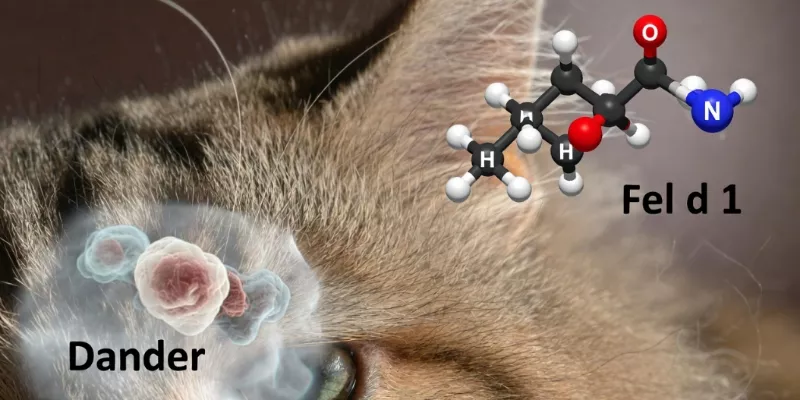
Most people think cat hair is the enemy. We see tufts of fur floating in the sunlight and assume that is what makes us sneeze.
But the real culprit is invisible.
It is a protein called Fel d 1. This protein is found in a cat’s saliva, skin oils, and urine. Since Maine Coons are fastidious groomers (they lick themselves constantly), they coat their fur in this saliva. Once it dries, it turns into microscopic dust particles called dander.
When your Maine Coon shakes that glorious mane, this dander launches into the air. Because Maine Coons are big cats, they simply have more “surface area” to produce this protein than a standard house cat.
3 Hard Facts You Need to Know
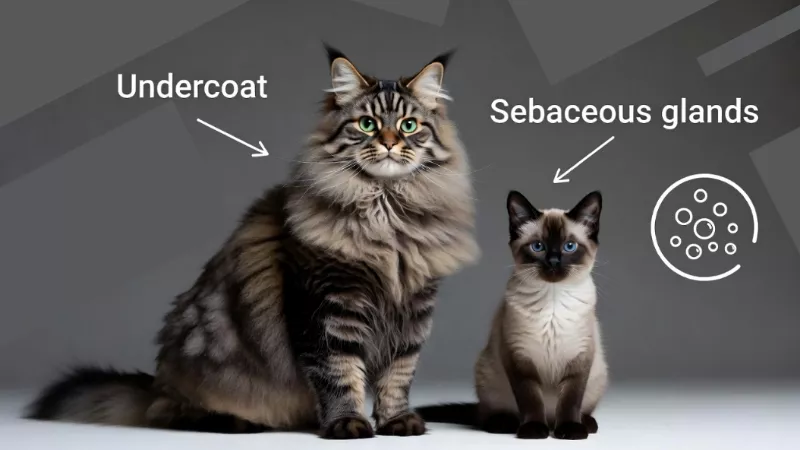
If you have allergies, you need to walk into this with your eyes open. Many people ask, are Maine Coons hypoallergenic compared to other breeds? Here are three critical facts specific to this breed.
1. Volume Matters (More Cat = More Allergens)
It is simple math. A 20-pound Maine Coon has a lot more skin and fur than an 8-pound Siamese. More skin means more sebaceous glands producing oils, and more fur means more territory for dried saliva to get trapped. If you are highly sensitive, this volume can be overwhelming.
2. The Undercoat is a “Trap”
Maine Coons have a triple coat designed for harsh winters. They have a dense, woolly undercoat beneath those silky guard hairs. This undercoat is excellent at trapping old skin cells and dried spit. When they shed (and oh boy, do they shed during spring!), all that trapped allergen gets released into your home at once.
3. The “Gender Loophole” (A Glimmer of Hope)
Here is a little secret from the breeding world: Female cats tend to produce lower levels of the Fel d 1 protein than males.
Neutered males produce less than intact males, but females generally produce the least. If you are on the fence, adopting a female Maine Coon might be your safest bet for keeping reactions low.
Sophie’s Survival Guide: How to Live with a Maine Coon (Without Being Miserable)
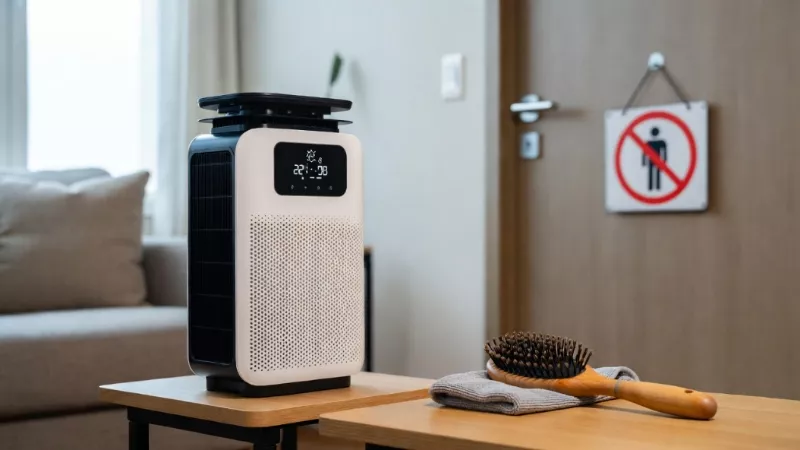
If your allergies are mild to moderate, you don’t have to give up on your dream. You just need to change your lifestyle. Here is the protocol I recommend to new owners:
Rule #1: The Bedroom is a “Cat-Free Zone”
This is non-negotiable. You spend 8 hours a day sleeping. Your immune system needs that time to recover without fighting allergens. Keep the bedroom door closed 24/7. It might be hard to ignore those paws scratching at the door initially, but your lungs will thank you.
Rule #2: Invest in a HEPA Air Purifier
Don’t just buy a fan; get a true HEPA (High-Efficiency Particulate Air) filter. These are designed to trap particles as small as pet dander. Place one in the living room where your cat spends the most time. It makes a noticeable difference in air quality.
Rule #3: Outsource the Grooming
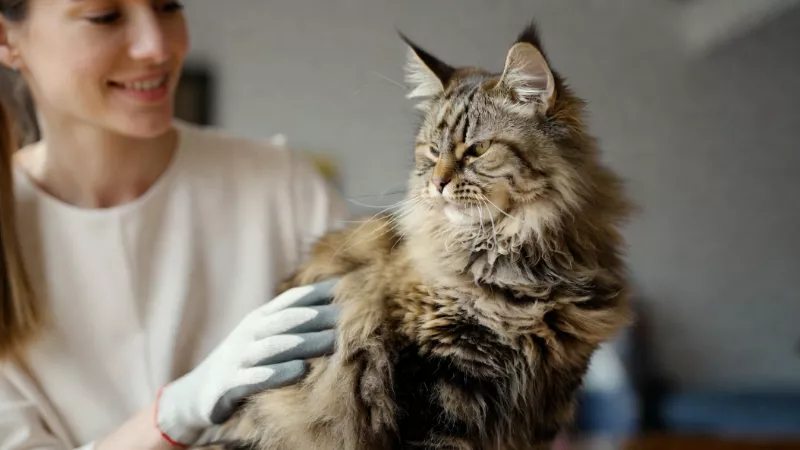
Do not brush the cat yourself if you can avoid it. Ask a family member who isn’t allergic to do the daily brushing, preferably outdoors or in a well-ventilated garage. If you live alone, take your Maine Coon to a professional groomer once a month for a “de-shedding” treatment.
Rule #4: Look into “Anti-Allergy” Diets
Science has come a long way. There are now cat foods available (like Purina Pro Plan LiveClear) that are formulated to neutralize the Fel d 1 protein in the cat’s saliva. It doesn’t work overnight—usually, it takes about 3 weeks—but many owners report a significant drop in their allergy symptoms.
This diet can be a game-changer for many owners who are wondering are Maine Coons hypoallergenic enough to live with.
Final Verdict: Are Maine Coons Hypoallergenic for You?
If you have severe asthma or anaphylactic reactions to cats, please do not risk your health. No cat breed, not even a hairless Sphynx, is completely allergen-free.
However, if you just get a stuffy nose or itchy eyes, a Maine Coon can still be part of your family.
My best advice? Before you adopt, visit a breeder or a friend with Maine Coons. Spend at least an hour sitting on their couch. Don’t touch your face. See how your body reacts. If you can handle that visit, with the survival guide above, you will likely be just fine.
So, even though the short answer to ‘are Maine Coons hypoallergenic‘ is no, with the right preparation, you can absolutely share your home with one.
Frequently Asked Questions
Are Maine Coon mixes hypoallergenic?
No. Since hypoallergenic traits are not dominant in Maine Coons to begin with, mixing them with another breed usually won’t eliminate the Fel d 1 protein. You should assume a mix will affect your allergies just as much as a purebred.
Which cat breed is best for allergy sufferers?
If you love the “fluffy” look but need better allergy control, consider a Siberian or Balinese. These breeds are genetically known to produce significantly less Fel d 1 protein than Maine Coons.
Do Maine Coons have a lot of dander?
Yes, due to their large size and thick double coats, they can produce and trap a significant amount of dander, especially if not groomed regularly.
Are Maine Coons hypoallergenic?
No, Maine Coons are not hypoallergenic. They produce the Fel d 1 protein and have thick fur that traps dander, which can trigger allergies.

Editor-in-Chief & Breed Specialist. With deep respect for TICA and CFA standards, Sophie specializes in “Gentle Giants”—Maine Coons and Ragdolls—helping you understand exactly why your cat behaves the way it does.
