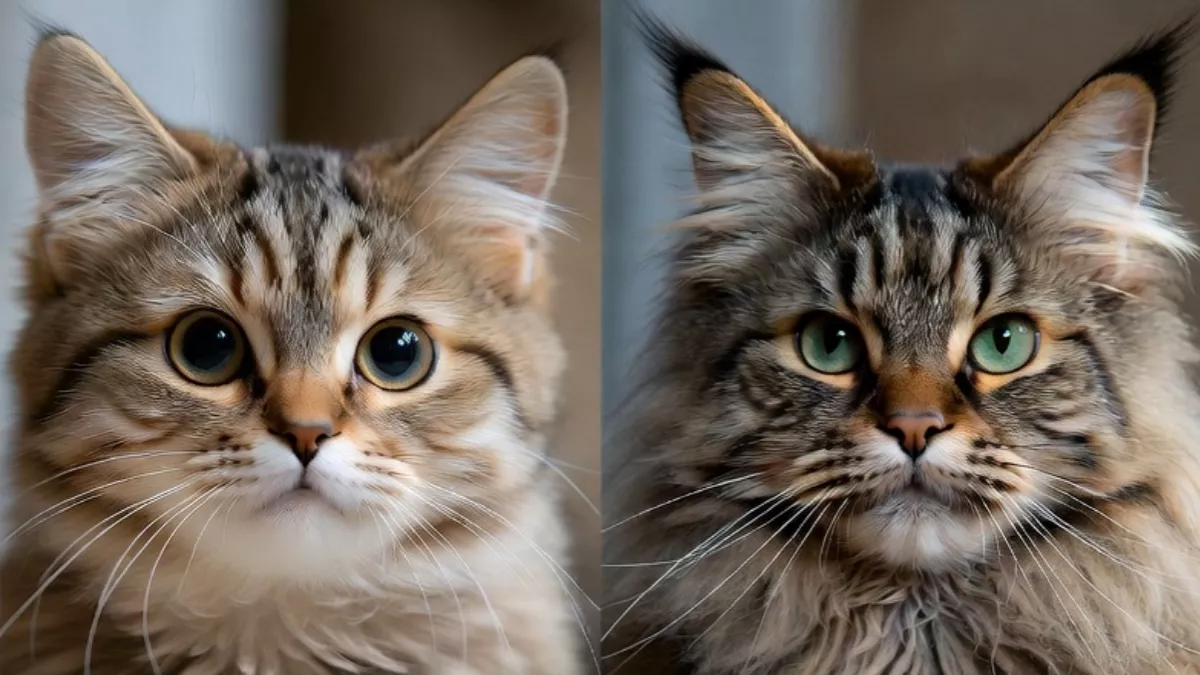
Let’s be honest. We’ve all done it. You look at your fluffy tabby cat stretching out… and you wonder if you have a Tabby and Maine Coon mix on your hands. Is he just big? Or is there some royal DNA hiding in there?
It is the most common question I get asked. And it makes sense! Maine Coons are the rockstars of the cat world, and everyone wants a backstage pass.
But here is where it gets confusing: “Tabby” is a coat pattern, not a breed. And “Maine Coon” is a breed, not a pattern.
So, can a cat be both? Absolutely. In fact, the classic Maine Coon look is a tabby.
So, how do you tell if your “Domestic Longhair” is actually a royal mix? You can’t ask them (they’ll just meow), so you have to look for the clues. Grab your cat (if they let you) and let’s check these 5 signs.
1. Check the Ears: A Sign of a Tabby and Maine Coon Mix
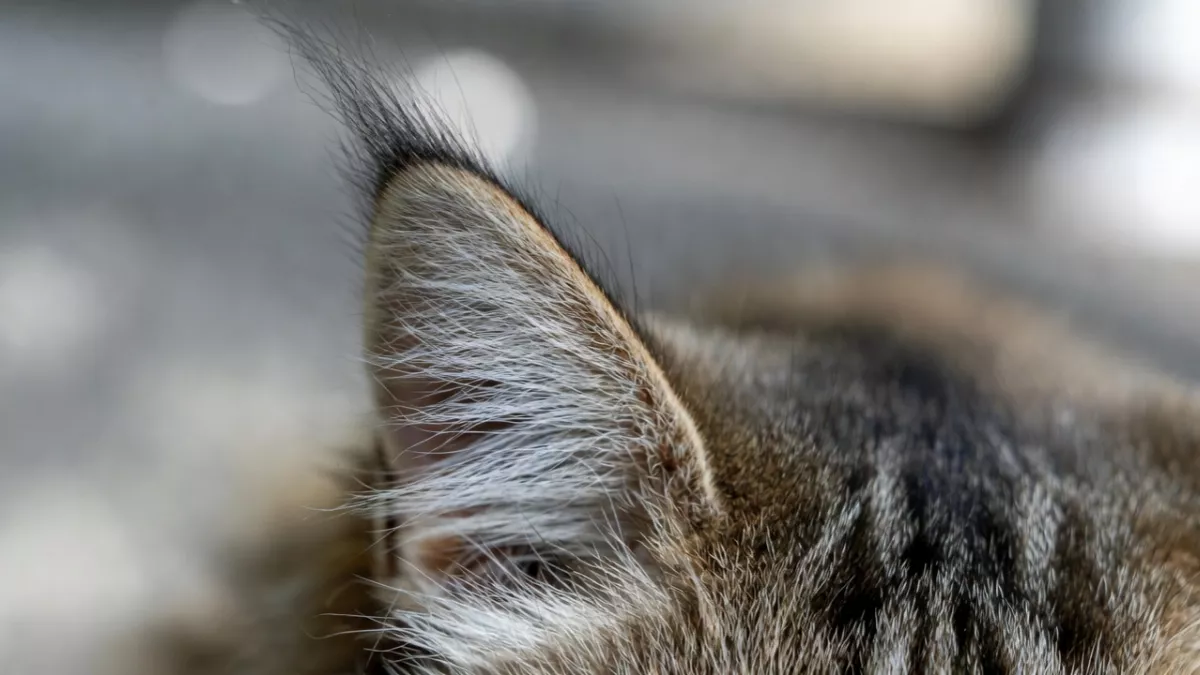
Look at the very tip of your cat’s ears.
A standard tabby usually has rounded ears. But a cat with Maine Coon DNA? They often have “Lynx Tips” (tufts of hair growing up from the point of the ear) and “Ear Furnishings” (hairs growing out from inside the ear).
- The Test: If their ears look more like a wild bobcat than a house cat, you might be onto something.
2. The Size & Shape: Not Just “Fat”
Maine Coons aren’t just heavy; they are long.
Regular tabbies tend to be compact and round. A Maine Coon mix, however, carries a rectangular body shape. They have broad chests and a solid, muscular frame.
- Sophie’s Insight: Pick them up (support the butt!). Does it feel like you are lifting a solid brick or a fluffy pillow? Maine Coon mixes feel dense and substantial.
Check out our Maine Coon Growth Chart to see how big they really get.
3. The “Raccoon” Tail
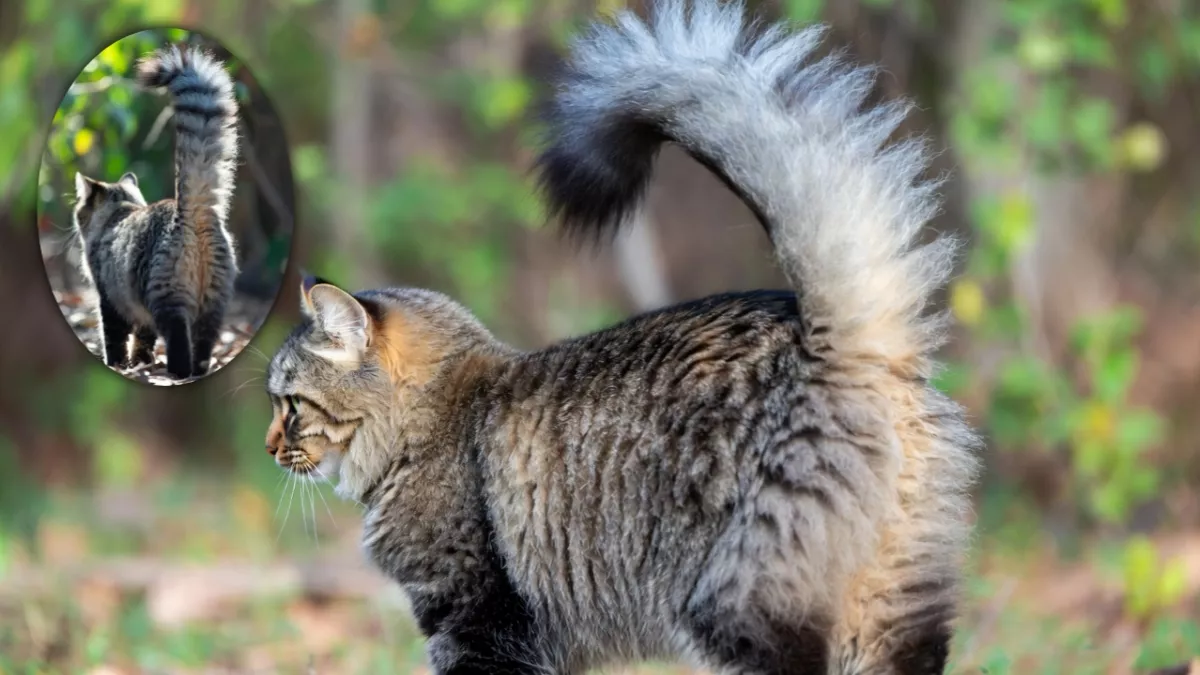
There is a reason the word “Coon” is in their name. Legend says they are part raccoon (biologically impossible, but a fun story!).
A true Maine Coon mix often has a tail that is bushy at the base and stays thick all the way to the tip. It should look like a feather duster. If your tabby has a thin, whip-like tail, they likely lean more toward the Domestic Shorthair side.
4. Personality: The “Dog” Software
This is usually the biggest giveaway.
Does your tabby greet you at the door? Do they follow you from room to room? Do they play fetch?
Maine Coons are famous for having “dog-like” personalities. If your tabby ignores you for 18 hours a day, they are probably just a cat. But if they need to be involved in everything you do (including showers), that’s the Coon gene kicking in.
5. The Voice: Chirps vs. Meows
Listen closely.
Most tabbies have a standard “Meow.”
Maine Coons, on the other hand, don’t really meow. They chirp, trill, and make little “brrrp” noises. It sounds more like a bird than a lion. If your big tabby walks around trilling at birds through the window, take note!
The “M” Myth: Don’t Be Fooled!
I have to bust this myth because I hear it every day.
People point to the “M” marking on their cat’s forehead and say, “Look! M for Maine Coon!”
I hate to break it to you, but “M” stands for Tabby.
Almost every tabby cat in the world has that M mark, whether they are a $2,000 purebred or a rescue from the street. It’s beautiful, but it doesn’t prove breed!
Final Thoughts
So, is your tabby a secret Maine Coon mix?
If they have the ear tufts, the dog-like personality, and the size to match, there is a good chance you have a “Gentle Giant” mix on your hands.
But even if they are 100% “Domestic Shorthair,” they are 100% yours—and that’s the only pedigree that really matters.
Do you suspect your cat is a mix? Drop a photo in the comments—I’d love to see their ear tufts (or lack of them)!

Editor-in-Chief & Breed Specialist. With deep respect for TICA and CFA standards, Sophie specializes in “Gentle Giants”—Maine Coons and Ragdolls—helping you understand exactly why your cat behaves the way it does.
