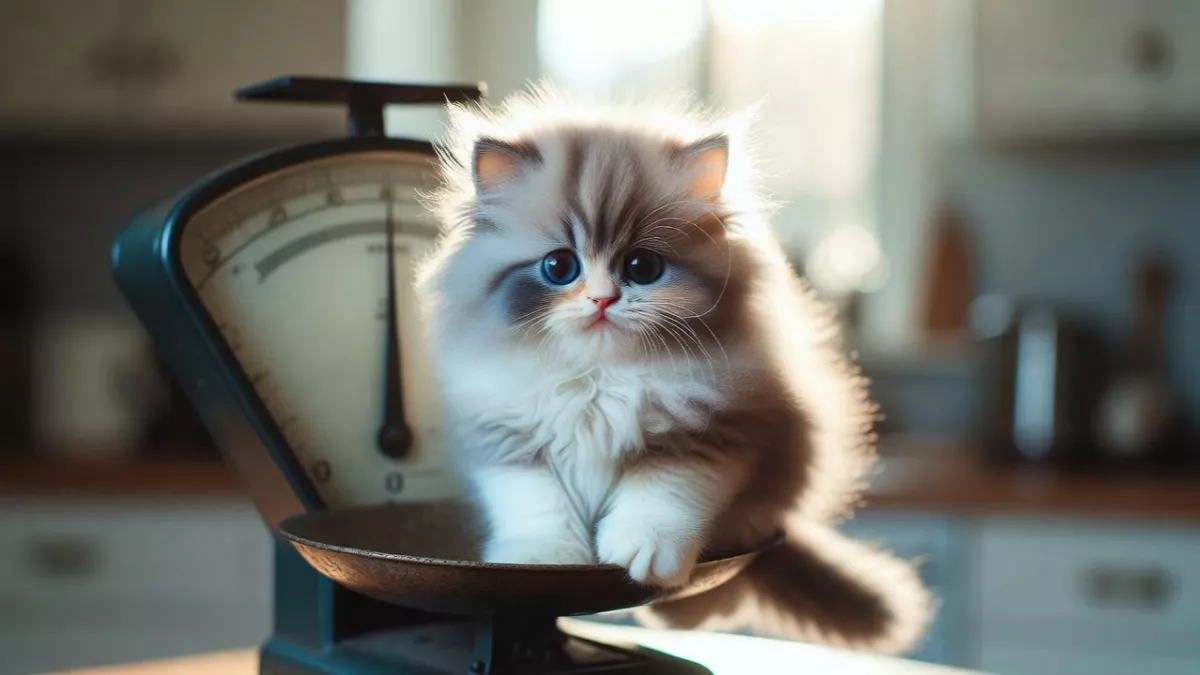
You picked up a tiny cloud of white fluff, and now that cloud is turning into a thunderhead. If you are wondering when your kitten will stop getting bigger, you are not alone. Our Ragdoll growth chart is designed to help you track their journey from a palm-sized kitten to a substantial lap-crusher.
Ragdolls are not your average house cats. They are heavy-boned, substantial animals that take years to fully mature. But how do you tell the difference between a healthy, growing cat and one that is just getting chubby?
Let’s break down the numbers.
The “Quick Answer”
The short answer is: Ragdolls are a slow-maturing breed, taking up to 4 years to reach full size. A mature Male averages 15–20 lbs (6.8–9.1 kg), while a Female averages 10–15 lbs (4.5–6.8 kg). They go through growth spurts followed by ‘filling out’ phases.
When Do Ragdolls Stop Growing?
Unlike smaller breeds that reach their adult size by their first birthday, Ragdolls enjoy what I call “The Cuddly Expansion.”
This is a four-year marathon.
- Year 1: They grow Up (Height and Length).
- Years 2–4: They grow Out (Muscle and Width).
You might notice that your cat grows in “steps.” They might shoot up in height and look lanky for a few months, then suddenly stop growing taller and start getting heavier. This is completely normal.
Ragdoll Growth Chart (0 to 12 Months)
The first year is the “puppy phase.” Your Ragdoll will be playful, clumsy, and growing rapidly.
Here is what to expect during the first year using our Ragdoll growth chart:
| Age | Male Weight | Female Weight |
|---|---|---|
| 1 Month | 0.8 – 1.3 lbs (0.4 – 0.6 kg) | 0.6 – 1.1 lbs (0.3 – 0.5 kg) |
| 3 Months | 3.0 – 4.5 lbs (1.4 – 2.0 kg) | 2.5 – 3.8 lbs (1.1 – 1.7 kg) |
| 6 Months | 7.0 – 10.0 lbs (3.2 – 4.5 kg) | 6.0 – 8.0 lbs (2.7 – 3.6 kg) |
| 9 Months | 10.0 – 13.0 lbs (4.5 – 5.9 kg) | 7.5 – 9.5 lbs (3.4 – 4.3 kg) |
| 12 Months | 12.0 – 15.0 lbs (5.4 – 6.8 kg) | 8.5 – 11.0 lbs (3.9 – 5.0 kg) |
Adult Ragdoll Weight Chart (1 to 4 Years)
Congratulations, your cat is now a teenager! This is where the “Cuddly Expansion” truly begins.
After age one, the vertical growth slows down. Now, they begin to develop their broad chest, heavy hindquarters, and thick ruff. Their coat also reaches its full volume—read more about their plush semi-longhair coat in our Ragdoll Cat Breed Profile.
| Age | Male Weight | Female Weight |
|---|---|---|
| 1.5 Years | 13 – 16 lbs (5.9 – 7.3 kg) | 9 – 12 lbs (4.1 – 5.4 kg) |
| 2 Years | 14 – 17 lbs (6.4 – 7.7 kg) | 10 – 13 lbs (4.5 – 5.9 kg) |
| 3 Years | 15 – 19 lbs (6.8 – 8.6 kg) | 10 – 14 lbs (4.5 – 6.4 kg) |
| 4 Years | 15 – 20+ lbs (6.8 – 9.1+ kg) | 10 -?– 15+ lbs (4.5 – 6.8+ kg) |
The “Primordial Pouch”: Fat or Normal?
This is the most common concern I hear from new owners: “My Ragdoll has a swinging belly. Is he fat?”
In most cases, No.
Ragdolls naturally possess a prominent Primordial Pouch. This is a loose flap of skin and fat on the belly that swings when they walk (or run for treats). It is an ancient trait designed to protect their vital organs during fights. It is not a sign of obesity.
However, because Ragdolls are “plush,” it can be hard to tell what is fluff and what is fat. To be sure, check your cat against the official Body Condition Score from the World Small Animal Veterinary Association. You should be able to feel their ribs with a light touch.
Factors Influencing Size
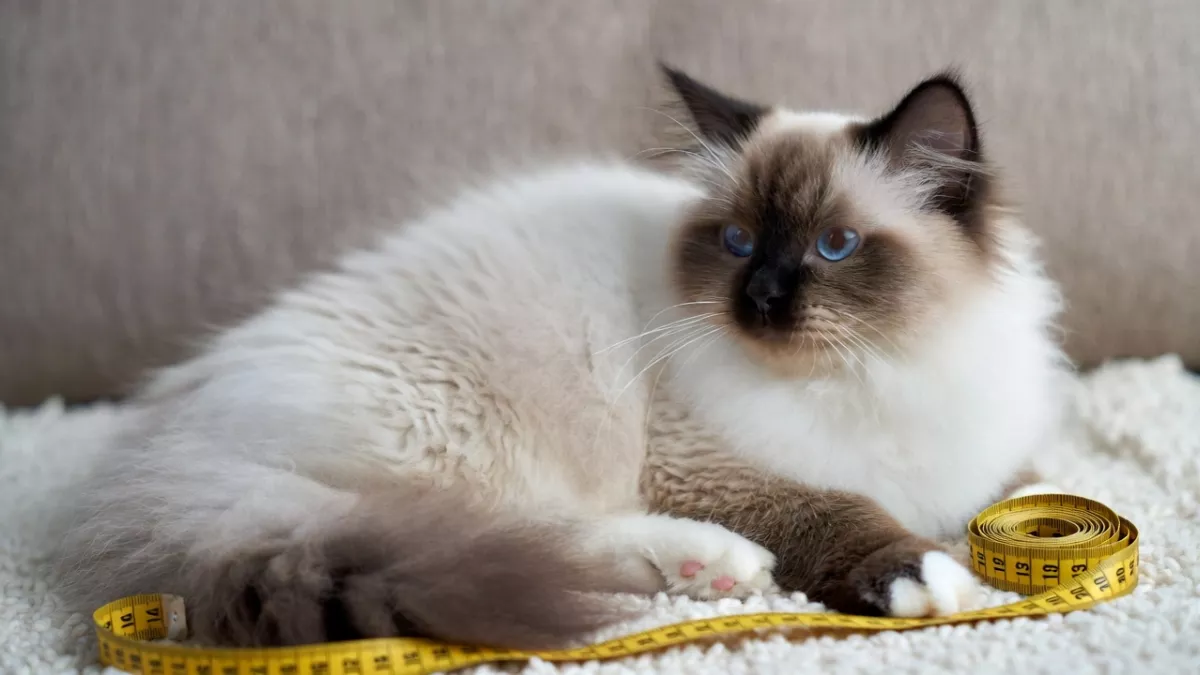
Just like humans, every Ragdoll is unique. Your cat might not fit perfectly into the Ragdoll growth chart, and that is okay.
- Genetics: This is the biggest factor.
- Gender: Males are significantly heavier and broader than females.
- Nutrition: Feeding a large breed requires high-quality fuel. Quality food helps them reach their full genetic potential without becoming overweight. Be aware that feeding a giant costs more—check our guide on Ragdoll Cat Price 2026 for budget expectations.
- Patterns: Interestingly, as your kitten grows, their color markings might seem to “stretch” or move. Learn more about how their coat develops in our Ragdoll Cat Colors and Patterns guide.
Ragdoll vs. Maine Coon Size
Both are giants, but they carry their weight differently.
- Maine Coon: Taller, longer, and more rectangular. They look like athletes.
- Ragdoll: Broader, heavier-boned, and plush. They look (and feel) like weighted blankets.
While a Maine Coon might look bigger because of their height, a Ragdoll often surprises people with how dense and heavy they feel when picked up.
Ragdoll Growth Chart: FAQ
Yes. They often hit a “pause” button around their first birthday. They might not gain much weight for a few months before entering their “filling out” phase in year two.
Look at the paws! If your 4-month-old kitten has massive paws that look too big for their body, they likely have a lot of growing left to do.
Final Thoughts: Patience is Key
Tracking your Ragdoll growth chart can be fun, but remember: these cats are marathon runners, not sprinters. Unlike other breeds that finish growing in a year, your Ragdoll will keep filling out and fluffing up until they are 3 or even 4 years old.
If your kitten seems a bit smaller than the average on the chart, don’t panic. Genetics play a huge role. As long as they are eating well, playing, and acting like a happy “floppy potato,” they are likely just fine.
Enjoy the kitten stage while it lasts—before you know it, you will be trying to find space on the bed for a 20lb giant!
How much does your Ragdoll weigh right now? Drop their age and weight in the comments below—let’s compare our gentle giants!

Editor-in-Chief & Breed Specialist. With deep respect for TICA and CFA standards, Sophie specializes in “Gentle Giants”—Maine Coons and Ragdolls—helping you understand exactly why your cat behaves the way it does.
